A Poetic End to Slavery
On The Poetry of Phillis Wheatley

Text within this block will maintain its original spacing when publishedO thou bright jewel in my aim I strive
To comprehend thee. Thine own words declare
Wisdom is higher than a fool can reach.
I cease to wonder, and no more attempt
Thine height t' explore, or fathom thy profound.
But, O my soul, sink not into despair,
Virtue is near thee, and with gentle hand
Would now embrace thee, hovers o'er thine head.
Fain would the heav'n-born soul with her converse,
Then seek, then court her for her promis'd bliss.
Auspicious queen, thine heav'nly pinions spread,
And lead celestial Chastity along;
Lo! now her sacred retinue descends,
Array'd in glory from the orbs above.
Attend me, Virtue, thro' my youthful years!
O leave me not to the false joys of time!
But guide my steps to endless life and bliss.
Greatness, or Goodness, say what I shall call thee,
To give me an higher appellation still,
Teach me a better strain, a nobler lay,
O thou, enthron'd with Cherubs in the realms of day!
On Virtue ~ A Poem by Phillis Wheatley
It is hard to think of a more pressing “survival situation” than that of slavery. At least in an apocalypse or wilderness survival situation, people can maintain a sense of individual agency. With slavery, that agency is gone. A slave’s entire existence, routine and needs are at the whims of their captor: what they eat, where they go, the work they do, and so forth. What does it take to endure the dehumanizing conditions of slavery - and how can the soul and spirit of humanity remain in-tact until the day of liberation arrives?
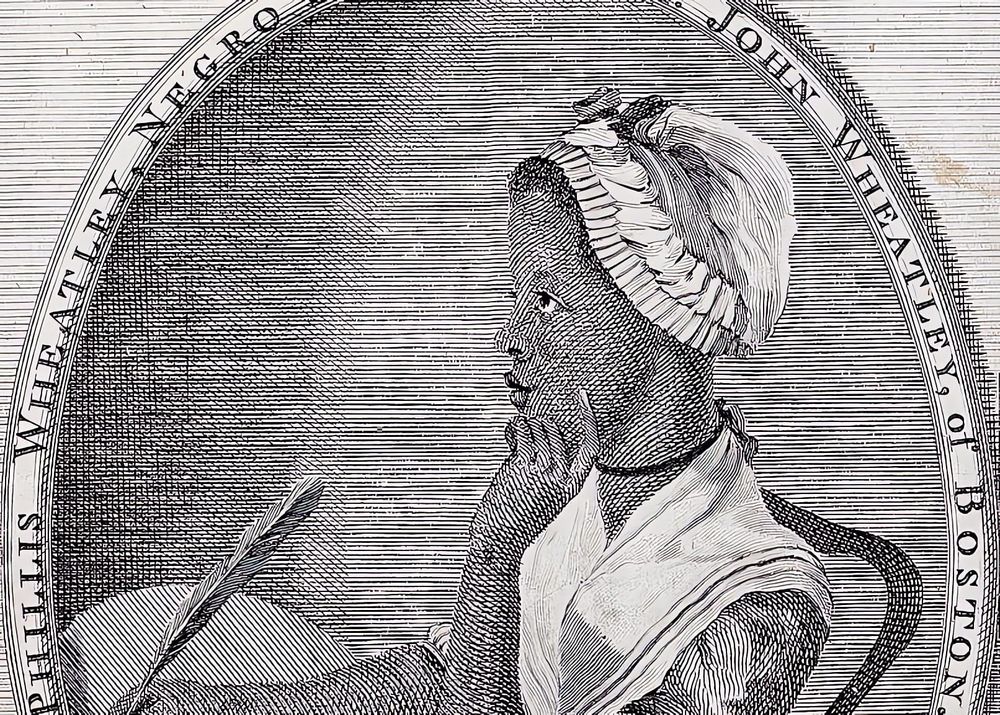
Phillis Wheatley is believed to have been born around 1753 in what is now either Senegal or Gambia, Africa. In 1761, she was captured in West Africa and taken to Boston, USA, where she was taken as a slave by tailor John Wheatley. A relative of the Wheatley’s would describe Phillis as “of slender frame and evidently suffering from a change of climate”, with “no other covering than a quantity of dirty carpet about her”. Given her appearance and condition, Phillis was purchased for a comparatively small amount of money, under the impression that she was believed to be terminally ill and would likely only be of service to the family for a short period of time.
Text within this block will maintain its original spacing when published'Twas mercy brought me from my Pagan land,
Taught my benighted soul to understand
That there's a God, that there's a Saviour too:
Once I redemption neither sought nor knew.
Some view our sable race with scornful eye,
"Their colour is a diabolic die."
Remember, Christians, Negros, black as Cain,
May be refin'd, and join th' angelic train.
On Being Brought from Africa to America ~ A Poem by Phillis Wheatley
She seems to have had a mixed attitude towards her enslavement, at least for parts of her life. Due to her frailty upon arrival in Boston, she was unfit for a lot of the household duties that would normally be given to slaves. As such, the Wheatley family sought to teach her to read and write, giving her access to the Bible, classic Greek and Roman works, as well as poetry from the likes John Milton and Alexander Pope. It’s evident from her own poetry that she has a great gratitude and joy from reading the material she had access to, giving her a spiritual anchor to hold on to in lack of a connection back to her homeland. Whether she truly believed that (by fate) God had brought her to the US in order to be free from her “Pagan” surroundings and to build a trust within him, or if it was simply an appeal to her white captors for greater freedoms, remains debated amongst historians. In both scenarios, it’s clear that Wheatley is using her poetry and written skill to find an acceptance in her circumstances, allowing her to build some semblance of meaning in her life - and for a future beyond - rather than remain a victim of her capture.
This attitude carries over across other poems from her catalogue, too. Her first published poem - On Messrs, Hussey and Coffin - came from hearing a story from friends of John Wheatley over dinner of how they narrowly escaped death during a storm at sea. The poem reaffirms the idea that even natural disasters and calamities are only spiritual tests, and that even if death arrives, there is an afterlife in Heaven in which we can find our freedom. Perhaps this was Wheatley’s attitude towards her own life, too?
Text within this block will maintain its original spacing when publishedDid Fear and Danger so perplex your Mind,
As made you fearful of the Whistling Wind?
Was it not Boreas knit his angry Brow
Against you? or did Consideration bow?
To lend you Aid, did not his Winds combine?
To stop your passage with a churlish Line,
Did haughty Eolus with Contempt look down
With Aspect windy, and a study'd Frown?
Regard them not; — the Great Supreme, the Wise,
Intends for something hidden from our Eyes.
Suppose the groundless Gulph had snatch'd away
Hussey and Coffin to the raging Sea;
Where wou'd they go? where wou'd be their Abode?
With the supreme and independent God,
Or made their Beds down in the Shades below,
Where neither Pleasure nor Content can flow.
To Heaven their Souls with eager Raptures soar,
Enjoy the Bliss of him they wou'd adore.
Had the soft gliding Streams of Grace been near,
Some favourite Hope their fainting hearts to cheer,
Doubtless the Fear of Danger far had fled:
No more repeated Victory crown their Heads.
Had I the Tongue of a Seraphim, how would I exalt thy Praise; thy Name as Incense to the Heavens should fly, and the Remembrance of thy Goodness to the shoreless Ocean of Beatitude! — Then should the Earth glow with seraphick Ardour.
Blest Soul, which sees the Day while Light doth shine,
To guide his Steps to trace the Mark divine.
On Messrs, Hussey and Coffin ~ A Poem by Phillis Wheatley
By the time Wheatley was 18, she had written enough poetry to form a pamphlet - but most of the Boston publishers refused to take her work, likely on the account of her being African. In London, however, a growing community of evangelical abolitionists had become familiar with Wheatley’s work through her elegy to the Reverend George Whitefield, and helped arranged passage for her to come to England in 1771. She would be greeted by a number of abolitionist figures, including the Earl of Dartmouth, poet Baron George Lyttleton, soon-to-be Mayor of London Sir Brook Watson, and the future Founding Father of America, Benjamin Franklin.

While Wheatley ventured back to America, bookseller Archibald Bell began to circulate Poems on Various Subjects, Religious and Moral in England in 1773 - the first volume of poetry by an African published in modern times.
On her return, Wheatley would be freed from being a slave - and in a cruel twist of irony, she would find herself under more hardship than she ever had been during her captivity. Many of the Wheatley family, who were directly supporting her poetic efforts, died in the coming years. She married another free black man, John Peters, in 1778, but due to the difficulties of life both during and after the American Revolution, the couple would find themselves moving across the country and would be constantly looking for work in an era when many places refused to work with black people as equals. They lived in abject poverty, and multiple children the couple conceived would die during their infancy. As described by one of the Wheatley relatives, Margaretta Matilda Odell, when visiting her:
She was herself suffering for want of attention, for many comforts, and that greatest of all comforts in sickness—cleanliness. She was reduced to a condition too loathsome to describe. ... In a filthy apartment, in an obscure part of the metropolis ... . The woman who had stood honored and respected in the presence of the wise and good ... was numbering the last hours of life in a state of the most abject misery, surrounded by all the emblems of a squalid poverty!
Despite all of this, Wheatley never lost hope that there would be an appetite, even in America, for more of her poetry. In 1779, she advertised for patrons to aide her in releasing a poetry volume in dedication to Benjamin Franklin. The first version of this book would not appear in America until 1786, two years after her death in 1784.
Only a scattering of poems were published in the years before she died. One of these, in the year of her death, was a 64-line poem entitled Liberty and Peace. It celebrated the ideals of freedom espoused by the newly-independent America and its detanglement from a Britain which had been co-opted by the interests of a Venetian merchant class.
Text within this block will maintain its original spacing when publishedLO! Freedom comes. Th' prescient Muse foretold,
All Eyes th' accomplish'd Prophecy behold:
Her Port describ'd, "She moves divinely fair,
"Olive and Laurel bind her golden Hair."
She, the bright Progeny of Heaven, descends,
And every Grace her sovereign Step attends;
For now kind Heaven, indulgent to our Prayer,
In smiling Peace resolves the Din of War.
Fix'd in Columbia her illustrious Line,
And bids in thee her future Councils shine.
To every Realm her Portals open'd wide,
Receives from each the full commercial Tide.
Each Art and Science now with rising Charms
Th' expanding Heart with Emulation warms.
Excerpt from Liberty and Peace ~ A Poem by Phillis Wheatley
Wheatley seems to be advocating for the types of freedoms for the people in America in a way she never fully had, both as a slave and as a “free” black. Scholars of the 1900s castigated Wheatley for not being more overt and vocal about bringing an end to slavery, questioning whether she had any concern for the cause at all. Letters from Wheatley, such as the one she wrote to Reverend Samson Occom in 1974, suggest otherwise:
“Otherwise, perhaps, the Israelites had been less solicitous for their Freedom from Egyptian Slavery: I don’t say they would have been contented without it, by no Means, for in every human Breast, God has implanted a Principle, which we call Love of freedom; it is impatient of Oppression, and pants for Deliverance; and by the Leave of our modern Egyptians I will assert that the same Principle lives in us.”
Wheatley understood that a move away from slavery and towards all souls as equally valuable - regardless of an individual’s skin colour - could never be achieved by simply castigating the act of slavery in and of itself. This is a time when so many jobs and professions were involved with slavery, to the degree that simply pulling the rug from underneath them may well have caused poverty and famine for the families and children who were not to blame for the circumstances.
Wheatley was much smarter than this; she made a point of showing the quality of her own character to be worthy of the same respect as with white people. She advocated for a model of society which would uplift everyone within it, which she knew was only possible through a celebration of higher truth, values and beauty - the very things that had allowed her to survive the uprooting from her native culture. She made her individual struggle of securing a life of freedom (that she never fully had) into a struggle for all of her contemporaries experiencing the same. Her route to survival could only have been achieved through inspiring the hearts and minds of others - which in turn has helped bring an end to this kind of slavery. Poetry is the language of the soul, and her use of it allowed her soul, and others, to be seen and respected for generations to come.
Text within this block will maintain its original spacing when publishedImagination! who can sing thy force?
Or who describe the swiftness of thy course?
Soaring through air to find the bright abode,
Th' empyreal palace of the thund'ring God,
We on thy pinions can surpass the wind,
And leave the rolling universe behind:
From star to star the mental optics rove,
Measure the skies, and range the realms above.
There in one view we grasp the mighty whole,
Or with new worlds amaze th' unbounded soul.
Excerpt from On Imagination ~ A Poem by Phillis Wheatley
Your Turn
In an era where overt, race-based slavery has mostly been supplanted with debt, tax and wage-based slavery, there is much I admire about Wheatley’s approach to shifting the course of history for the betterment of humankind. Her poetry helped plant the seeds that brought an end to slavery, achieved by celebrating the divinity of the human spirit and the value that each and every one of us have during our time on Earth. A simple change to a law, or a declaration of independence, is not always enough to convince others of a better way of doing things - something evident by how Wheatley’s life became far more difficult following her emancipation. These kinds of changes are cultural and multi-generational - and it is poetry that can help the highest parts of ourselves not only survive, but also thrive in how they inspire those that come after us.
With this in mind, I invite you to have a go at writing your own poem, inspired by the words and themes of Phillis Wheatley:
- Choose one of the poems above that moved you the most, and one line which particularly stood out to you.
- Use this line as the title for your own poem.
- If you need an additional prompt, see if you can use your poem to answer the question: When was I last able to feel truly like myself?
I’d be honoured to see some of your responses as a comment on this piece 👇
Thank you all for making time to read this piece. If you’d like to support bringing poetry to others who need help in returning from dark places into light, please consider purchasing my latest poetry book, Go Forth, Butterfly! direct from my website. This helps a bunch too!
I look forward to bringing you more soon.
With gratitude,
Tom