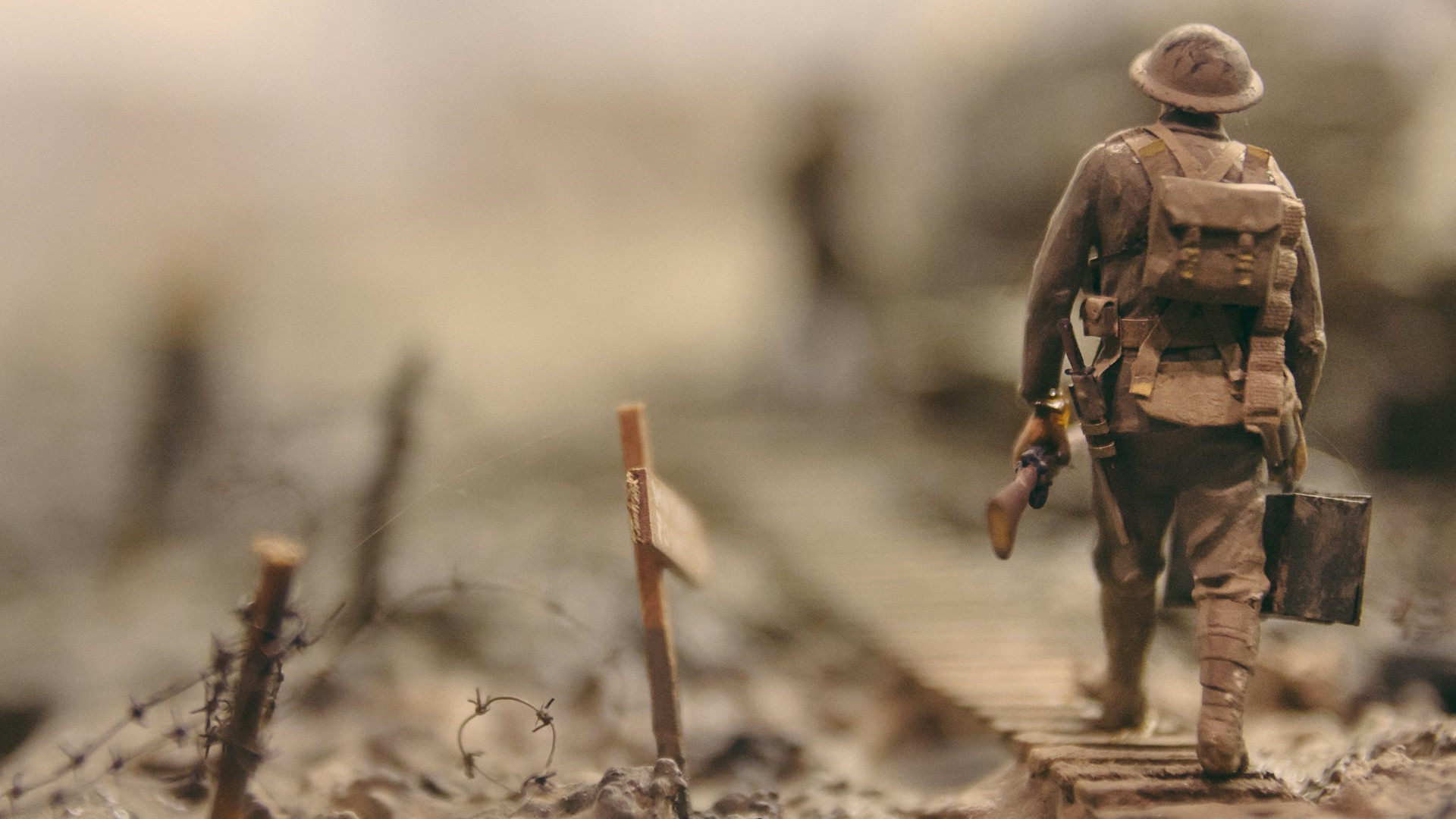
War is a topic long glorified—and long vilified—by poetry. Understanding that words have the power to rally people’s spirits in support of a cause, pre-television governments often employed poets to glorify their war efforts, sway public opinion in their favor, and create propaganda for enlisting new troops—all in ways that modern cinema, including war movies, are now continuing to do.
For this month's Pushback Poetry over at the Solari Report, I chose to make the words of war poets the focus, given the current rhetoric and actions coming from media and governments causing an escalation of global tensions.
The piece is free to read over at solari.com—and here's a little excerpt of what you can expect to find:
For me, the fact that many of these poets continued to fight right up until their death is a testament to the power of the British war propaganda in creating romantic sentiments about the need to “win” the fight. Perhaps, too, it is evidence of the fear of the consequences of dissent—even when the realities of fighting were so obviously grim. But, as the case of [Siegfried] Sassoon shows, the truth cannot be suppressed.
The two generations of British war poets are fascinating case studies, showing how those initially in agreement with the premise of war can convert to a more critical position once they see war’s true horrors—and how poetry was the form they felt best suited to communicate that truth. Moreover, these weren’t just amateur poets; [Keith] Douglas’ verse is thoughtfully constructed, with “Vergissmeinnicht’s” deliberately irregular rhymes and near-rhymes mirroring Douglas’ need to find some sense and order in the sight in front of him—to no avail. Sassoon’s use of satire, paired with regular meter and rhyme schemes, is again a showcase of using poetic craft to deliberately highlight the disconnect between what the commanders of the war saw and the realities of those fighting in it. The structural and rhythmic elements are deliberate, helping readers to feel the tension of the soldiers’ circumstance, giving us the emotional and intuitive knowledge to comprehend why such conflicts should not be repeated.
Again, I'm grateful to the Solari Report for helping me bring this series to life—and I hope you feel inspired to push back against the prospect of unnecessary conflict in whatever ways you can. Perhaps it will even take the form of your own poem? Feel free to share it with me if so:
With gratitude,
Tom