Poems That Changed My Life
Not all poems are made equal. The best poems in the world invite us to consider new perspectives on our experiences and emotions, displaying a beautiful mastery of rhythm, metaphor, rhyme and so forth, all in a way that no other forms of storytelling media can.
Much of what passes as “poetry” in the modern age is more akin to a postmodern world salad with weeks-old, wilted leaved of cliche arranged “artistically” on a plate without much substance. Yet, poetry of the past has kept some of the most influential myths of past civilisations alive, from the Homeric epics to Beowulf, Milton’s Paradise Lost and even to the likes of Neihardt’s epic Cycles of the West, chronicling the rise of the American west and the demise of Native culture. Poetry, at its best, shows us how to communicate the most important ideas of our time in the most impactful way possible.
Unsurprisingly therefore, there are plenty of poems that changed my life (just as there have been books and films). For this piece, I have selected ten of those poems whose words have refused to leave me since I first read them, and which I believe showcase the power that this art form has over other forms of artistic media. Where possible, I’ll be using video readings that give a sense of the rhythm of each piece, or linking to where you can find the full text if this is not possible.
And, if you’d like to watch or listen to me read these pieces live, I did a livestream the other week just for that very purpose, which you can find linked below:
 Tom Shaw

Table of Contents
- Percy Bysshe Shelley ~ “Ozymandias”
- William Wordsworth ~ “The Prelude [Extract]”
- H.P. Lovecraft ~ “The Conscript”
- Charles Bukowski ~ “Bluebird”
- Edgar Allan Poe ~ “A Dream Within A Dream”
- Keith Douglas ~ “Vergissmeinnicht”
- Amos Russel Wells ~ “Talk Is Cheap”
- C.S. Lewis ~ “The Future of Forestry”
- Khalil Gibran ~ “A Tear and A Smile”
- William Blake ~ “Auguries of Innocence”
Percy Bysshe Shelley ~ “Ozymandias”
This one comes at the top of the list as it’s one of the earliest poems that graced my life which showed me the power of poetry. In just 14 lines, Shelley does wonders at highlighting how all empires and tyrants will ultimately perish to time. To this day it is still one of my favourites.
William Wordsworth ~ “The Prelude” [Extract]
Here’s a piece that came to me around the same time as Ozymandias, and one that still forms part of the Basecamp Poetry Workshop that I run. Taken from Wordsworth’s biographical poem, it recounts a memory of stealing a boat and encountering a mountain under the black of night. I love to work with the idea of the mountain as a metaphor for hardship and imposing challenge, and this piece does a great job of highlighting that metaphor.
H.P. Lovecraft ~ “The Conscript”
While Lovecraft is better known for his incredible horror-writing abilities (which I am also a big fan of), his anti-war poem The Conscript hits me in a way that other anti-war poems don’t quite manage to. Horror poetry is something of a rarity, yet this piece takes some of Lovecraft’s cosmic-horror strengths and imbibes them in the very-real horror of war. It’s gut-wrenching, dread-inducing, and a masterpiece of a poem.
Charles Bukowski ~ “Bluebird”
I sometimes struggle in enjoying free verse as much as I enjoy formic poetry. Bluebird is a great exception to this. One of Bukowski’s most well-known pieces for good reason, the rawness of the piece instantly struck me on my first experience with it, and has stuck with me ever since.
Edgar Allen Poe ~ “A Dream Within A Dream”
There are many poems by Poe that I could have picked for this spot, but “A Dream Within a Dream” is the one I most often find returning to my thoughts. It’s moving, existential examination of the fleeting nature of happiness can take me back to so many points in my life where I was frustrated at the perceived futility of chasing something meaningful. Poetry is well-suited to do just this, and Poe masterfully shows how it’s done here.
Keith Douglas ~ “Vergissmeinnicht”
I specifically include Iain McGilchrist’s reading of Vergissmeinnicht here because this is how I discovered the piece. War is dehumanising, and Douglas’ poem illustrates this beautifully in contrasting the British soldiers’ relief that their enemy is dead with the fact that their combatant, like any of us, loved and lived a life back home. The fact that Douglas was the same age as I am now when he died during the Second World War speaks volumes to what a literary talent he had. I can only imagine what other works we might have gotten would Douglas have lived beyond the war’s end.
Amos Russel Wells ~ “Talk Is Cheap”

This is likely to be one of the least well-known poems on this list, and it’s perhaps a travesty that it does not enjoy the same level of fame. It’s a poem I always like to bring up when discussing the power of words and language in speaking to truth, and I revisit it when in need of a call-up to be impeccable with my word. Language is powerful, and this poem is fantastic at highlighting why.
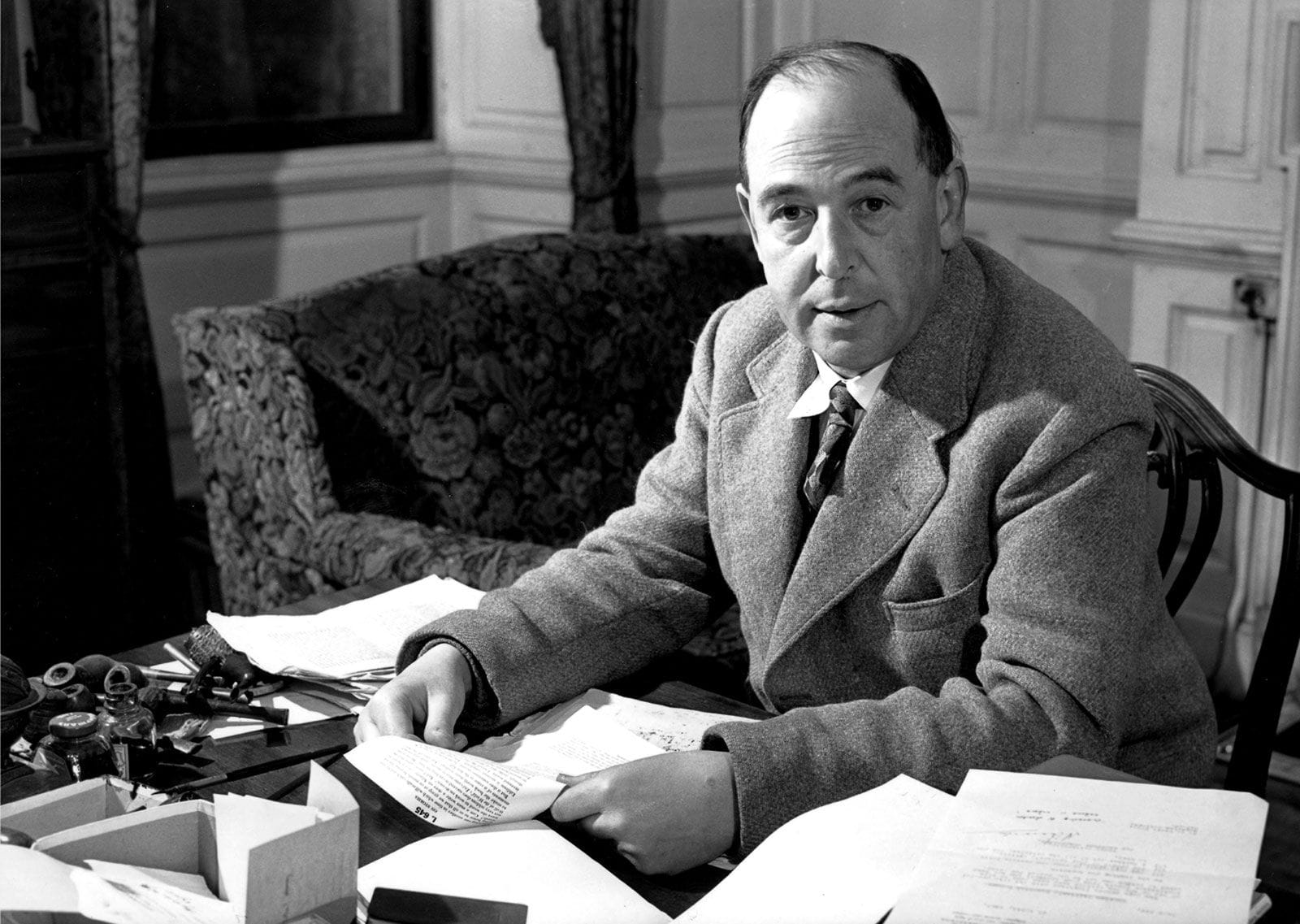
C.S. Lewis ~ “The Future of Forestry”
Like with Lovecraft, C.S. Lewis is not often remembered for his poetry. While it certainly does not form the main bulk of his work, the pieces of poetry we do have from him are incredibly poignant and speak to many of the same themes around industrialisation and loss of mythology/ethics that characterise his other works. The Future of Forestry, exploring what might happen to the British people as the natural world is lost, is perhaps one of the best examples of his work while also being one of the most accessible.
If you like this piece, I also talk about a few other poems of his in my essay Writing The Desecration of England, which you can find below:
 Tom Shaw
Khalil Gibran ~ “A Tear And A Smile”
Khalil Gibran’s work passed me by for many years until a conversation with Matt Presti finally encouraged me to dive in.
Tom Shaw
From the very opening lines I resonated strongly with the sentiments that Gibran puts forward, and he goes on to poetically illustrate the opportunity that sadness brings to return to happiness once more. It is a perspective on life I’ve been learning to embody more and more, and returning to this poem always reminds me of the value in doing so.
William Blake ~ “Auguries of Innocence”
Blake’s poetic case in support of truth and morality remained unpublished for many years after his death, yet it is packed with incredibly powerful and moving imagery that calls us to examine humanity’s moral decay in the context of a highly-interconnected universe. It is a complicated piece, deliberately packed with paradoxes and interweaving metaphors - which, for me, means I always end up finding another layer of meaning whenever I revisit it.
Leave a comment if any of these resonated with you - or if there are other poems that have inspired you in your life, and what they mean to you.
Thank you for taking the time to read this piece. I hope it sparked something within you.
With gratitude,
Tom