Under The Bludgeonings of Chance
On The Poetry of W.E. Henley
Text within this block will maintain its original spacing when publishedOut of the night that covers me,
Black as the Pit from pole to pole,
I thank whatever gods may be
For my unconquerable soul.
In the fell clutch of circumstance
I have not winced nor cried aloud.
Under the bludgeonings of chance
My head is bloody, but unbowed.
Beyond this place of wrath and tears
Looms but the Horror of the shade,
And yet the menace of the years
Finds, and shall find, me unafraid.
It matters not how strait the gate,
How charged with punishments the scroll.
I am the master of my fate:
I am the captain of my soul.
Invictus ~ A Poem by W.E. Henley
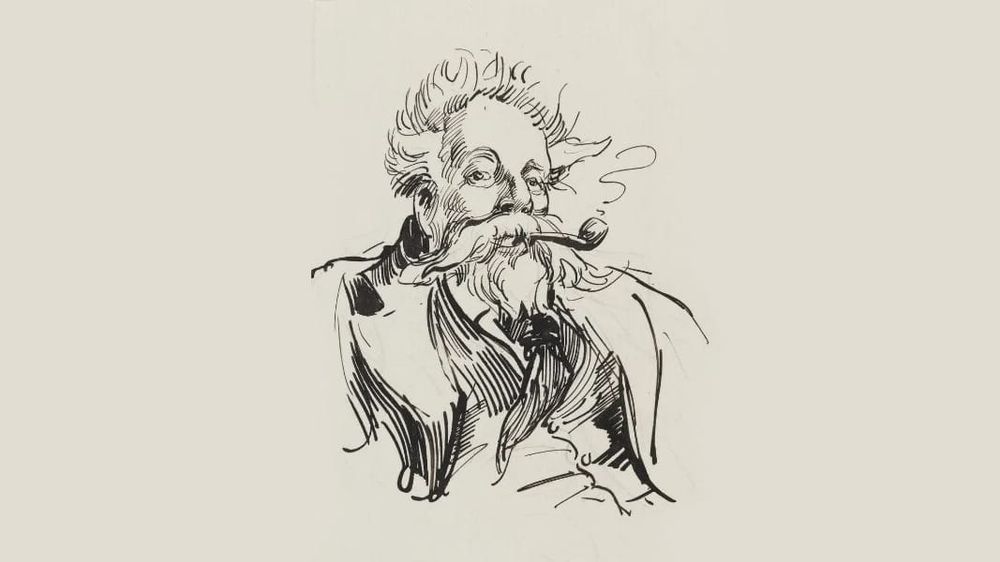
William Ernest Henley was born in Gloucester, UK, in 1849. His father was a bookseller, while his mother was a descendant of the literary critic Joseph Warton. One of his first teachers at school - Thomas Edward Brown - was also a poet, and Henley would later describe him in a letter as the first “man of genius” he had ever come across. It’s highly likely this background set the stage for Henley to become the celebrated poet he would ultimately come to be.
However, Henley’s own poetry stemmed from a much different set of circumstances than his predecessors. At 12 years old, Henley developed severe tuberculosis, requiring his leg to be amputated, and would regularly require hospital stays in order to drain the painful abscesses that would emerge on his legs. Tuberculosis would be a struggle throughout Henley’s life, and while he was able to pass his school exams and relocate to London in the hopes of becoming a journalist, he would regularly find himself in hospital battling further flare-ups of TB, preventing him from working.
In his mid-twenties, Henley would make his way to the Royal Infirmary of Edinburgh, in the hopes that surgeon Joseph Lister could prevent his other leg from also needing amputation. This marked the beginning of a three-year period in hospital, and the beginning of Henley’s first poetry collection, Hospital Poems, which would later be published as part of A Book of Verses.
Text within this block will maintain its original spacing when publishedThe morning mists still haunt the stony street;
The northern summer air is shrill and cold;
And lo, the Hospital, gray, quiet, old.
Where life and death like friendly chafferers meet.
Thro' the loud spaciousness and draughty gloom
A small, strange child — so aged yet so young! —
Her little arm besplinted and beslung.
Precedes me gravely to the waiting room.
I limp behind, my confidence all gone.
The gray-haired soldier-porter waves me on.
And on I crawl, and still my spirits fail:
A tragic meanness seems so to environ
These corridors and stairs of stone and iron,
Cold, naked, clean — half-workhouse and half-jail.
Enter Patient ~ A Poem by W.E. Henley
Henley’s poems regarding hospitals at this time were stark, realistic, and had very little resemblance stylistically to most poetry of the time - or even that which preceded it. Henley is using poetry here as a tool for truth; to speak to the dehumanizing nature of the hospital world and how inescapable its walls seemed to have become to him - and, at the same time, giving a voice to the grief and pain he endured through that experience without becoming a victim to it.
Indeed, his time in hospital gave him opportunity to witness those who were succumbing to the circumstances they were in, and to turn their struggles into poems. This led to poems with a subject matter and style which seems to have given way to the more subjective, decadence-rejecting poetry that would follow in the 1900s. One such example can be seen in the poem Suicide:
Text within this block will maintain its original spacing when publishedStaring corpselike at the ceiling,
See his harsh, unrazored features,
Ghastly brown against the pillow,
And his throat—so strangely bandaged!
Lack of work and lack of victuals,
A debauch of smuggled whisky,
And his children in the workhouse
Made the world so black a riddle
That he plunged for a solution;
And, although his knife was edgeless,
He was sinking fast towards one,
When they came, and found, and saved him.
Stupid now with shame and sorrow,
In the night I hear him sobbing.
But sometimes he talks a little.
He has told me all his troubles.
In his broad face, tanned and bloodless,
White and wild his eyeballs glisten;
And his smile, occult and tragic,
Yet so slavish, makes you shudder!
Suicide ~ A Poem by W.E. Henley
A handful of his hospital poems would be published in the Cornhill Magazine in 1875, following a visit by the poet critic Leslie Stephen. Stephen was in Edinburgh to deliver a lecture, and presumably found out about Henley’s poetic ventures while visiting, or in preparation for his travels. Leslie Stephen also brought with him a young Scottish author, Robert Louis Stevenson - who would become a close friend of Henley’s and use his likeness as the inspiration for Long John Silver in Treasure Island, possibly the most influential pirate novel of all time.
It’s highly likely that none of this would have happened if Henley had never taken to writing poetry. Thanks to the connections he had made, he felt motivated to return to London following his discharge and ultimately became one of the most powerful poetry editors in the country, and is largely thought to have shaped the wider poetry culture of the late 1800s through the authors he promoted (including Rudyard Kipling and W.B. Yeats), and through the poems of his own that he included.
Henley stands as an example of someone who used poetry not only to strengthen his inner resolve, but who also built a successful life for himself through his poetry and his words. And even when he still continued finding challenges in the face of his success, such as the death of his daughter, the end of his friendship with R.L. Stevenson, and a failed Poet Laureate appointment, he continued to write and share poetry to remain the “master of his fate”.
Text within this block will maintain its original spacing when publishedSo let me hence as one
Whose part in the world has been dreamed out and done:
One that hath fairly earned and spent
In pride of heart and jubilance of blood
Such wages, be they counted bad or good,
As Time, the old taskmaster, was moved to pay ;
And, having warred and suffered, and passed on
Those gifts the Arbiters preferred and gave,
Fare, grateful and content,
Down the dim way
Whereby races innumerable have gone,
Into the silent universe of the grave.
Grateful for what hath been—
For what my hand hath done, mine eyes have seen,
My heart been privileged to know ;
With all my lips in love have brought
To lips that yearned in love to them, and wrought
In the way of wrath, and pity, and sport, and song :
Content, this miracle of being alive
Dwindling, that I, thrice weary of worst and best,
May shed my duds, and go
From right and wrong,
And, ceasing to regret, and long, and strive,
Accept the past, and be for ever at rest.
Part 50 of Hawthorn and Lavender ~ A Poem by W.E. Henley
Your Turn
Those of you familiar with my poetry presentations may recall Invictus being a prominent inclusion at the likes of Anarchapulco and Liberpulco - and for good reason. Invictus is always a piece that rallies my own spirits if I’m facing obstacles in life. It has been an inspiration to me in developing poetry offerings as a tool for dealing with the challenges and difficulties we face in navigating the world.
With this in mind, I invite you to do the following:
- Choose one of the poems above that moved you the most, and one line which particularly stood out to you.
- Use this line as the title for your own poem.
- If you need an additional prompt, see if you can use your poem to answer the question: How did I recover when I was last sick?
I’ll be putting my own response in the comments of this piece, and I’d love for you to do the same 👇
Thank you all for making time to read this piece. If you’d like to support bringing poetry to others who need help in returning from dark places into light, please consider contributing to my current fundraising campaign. I’m raising funds to upgrade my digital infrastructure, in a way that keeps these pieces free for those who need them most, and that allows me to give direct support to those actively bringing poetry to their own circles and communities.
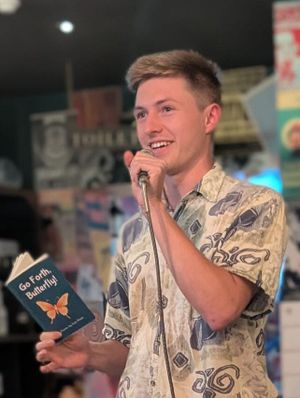
Alternatively, you can purchase my latest poetry book, Go Forth, Butterfly! direct from my website. This helps a bunch too!
I look forward to bringing you more soon.
With gratitude,
Tom